How do you choose the right construction technology for a specialist solution?
The right construction method for a bespoke solution is not determined by the desired end result alone. We show how we relate technical requirements to the substrate, access, materials and environmental conditions, and which considerations justify the choice of method for a project.

We assess material compatibility across the system as a whole, because products suitable for use individually may not perform as intended when combined.
Technical requirements for the solution
We begin choosing a construction method by establishing what function the proposed bespoke solution must fulfil within the structure and what stresses and conditions it must withstand. We distinguish between load-bearing capacity, watertightness, fire resistance, wear resistance and other properties, as the techniques needed to achieve them can differ significantly. We then clarify whether the solution must function independently or in conjunction with an existing structure whose behaviour also affects the new element. In defining the requirements, we consider not only service conditions but also loads and temporary conditions arising during installation. This allows us to compare methods based on their actual suitability, rather than simply their name or usual application.
Alongside the technical requirements, we define which side effects are acceptable during the work and which the chosen method must avoid. Drilling, cutting or mechanical fastening can generate vibration, dust and localised stresses that the existing structure may not be able to withstand. A wet process, in turn, can introduce moisture into areas where drying is restricted or moisture-sensitive layers are nearby. We therefore do not automatically treat methods intended to achieve the same goal as interchangeable. Suitable options are those whose working process and finished properties both meet the project's conditions and constraints.
For comparison, we define each key requirement in terms that allow us to assess whether the proposed method can meet it. A general desire for a strong or durable solution does not specify the loads, deformation or environmental effects that must be considered. Where necessary, we clarify load transfer, permissible movement and the conditions for retaining existing elements with the designer before making the final choice of method. We also distinguish mandatory properties from preferences, such as ease of moving equipment or simplicity of work stages. This brief helps rule out a method that appears feasible but fails to fulfil the solution's core function in its intended use.
Substrate condition and preparation
When assessing the substrate, we distinguish between the visible surface layer and the condition of the material beneath it, as an apparently uniform surface may be weak. Cracks, crumbling, oil, dust, previous coatings, substrate moisture and possible causes of moisture movement all influence the choice of method. Planning for cleaning alone is not enough if the underlying material or a damaged layer lacks the strength needed for fastening or bonding. We therefore always match the preparation method to the requirements of the chosen system and the properties of the existing structure. We separately identify defects that can be removed and conditions that require a change to the solution.
The preparation method must create a suitable surface without damaging the substrate or unnecessarily reducing its required cross-section, particularly in weak structures. Mechanical roughening can improve adhesion, but overly aggressive treatment may cause cracking or remove more material than permitted. Washing is suitable only if the added water and subsequent drying are compatible with the structure and the chosen material. A primer does not replace the removal of a weak layer, nor does it automatically make a contaminated substrate sound and suitable. We therefore compare complete work sequences, rather than considering an individual application technique separately from the preparation it requires.
If the substrate properties are not sufficiently known, we base the final choice of method on the results of further investigations or tests, rather than assumptions. Surface strength, moisture condition or hidden layers may need to be assessed using an appropriate method, selected according to the structure and the issue being investigated. A trial area helps establish whether the proposed cleaning and treatment produce the surface required for the chosen system under actual working conditions. We assess the result against the project specifications and the material manufacturer's instructions, not simply the surface's visual cleanliness or roughness. This allows us to justify the extent of preparation before treating the entire work area using the same method.
- Substrate strength and extent of damage
- Moisture and contaminants
- Layers to be removed and required surface profile
Access and equipment operating space
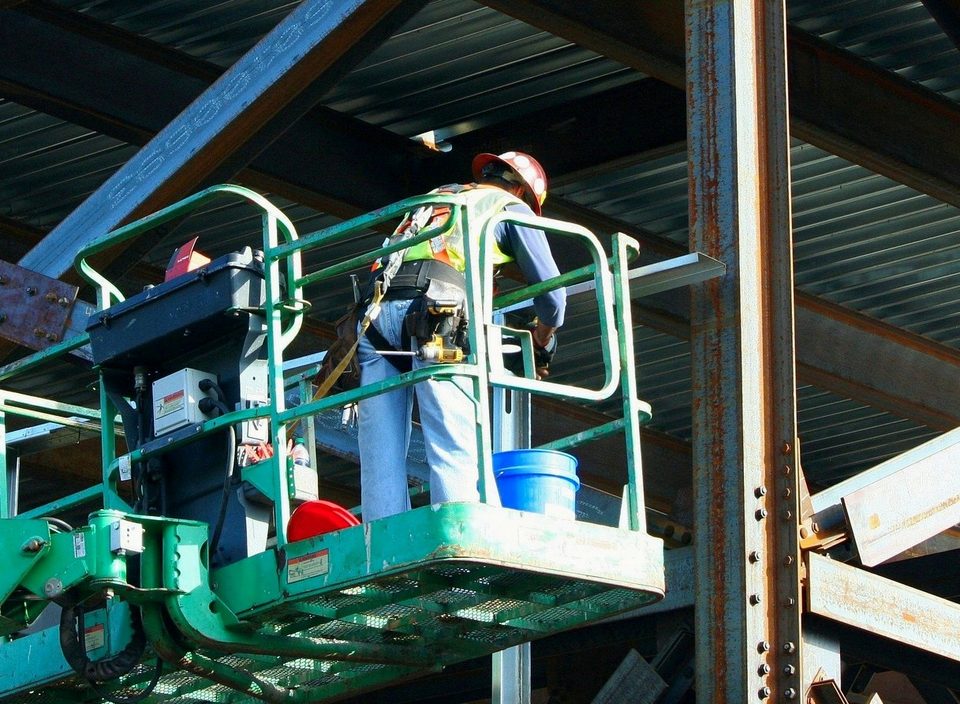
When assessing access, we look beyond whether a person or a piece of equipment can fit into the work area and consider the full range of movement required to carry out the work. A method may require clearance for the length of a drill rod, hose bend radii, lifting equipment movement or material feed in a particular direction. In a confined space, smaller equipment may not be an equivalent substitute if its capacity or operating principle affects the feasibility of the solution. We also consider the working position, as the suitability of the same method may differ between floor, wall and overhead work. We therefore assess the working space as a whole, including the setup, installation and removal stages.
Equipment positioning must suit the structure's load-bearing capacity and the safety requirements of the work area, not just the available floor space or access width. In addition to the equipment's own weight, we account for materials, temporary supports, and the forces and vibration generated during work at the points where they act. If the method requires fixing to an existing structure, both the feasibility of the fixing and its effect on the supporting structure must be assessed. Requirements for electricity, water, compressed air or extraction may rule out an otherwise technically suitable option at a particular location. When comparing alternatives, we consider whether adding auxiliary equipment removes the limitation or creates new obstacles.
Access also includes bringing materials into the work area and removing waste, as these movements may determine whether a method is practical. Installing a large component may be impossible even if there is enough room to carry out the installation at its final location. A solution fabricated on site sometimes reduces the size of the parts that need to be moved, but adds space requirements and constraints associated with mixing, storage or curing. We assess these needs together with temporary platforms, access routes and the necessary safety zones, rather than in isolation. This allows us to distinguish a genuinely feasible method from an option that merely fits the dimensions of the final location.
Material compatibility
We assess material compatibility across the system as a whole, because products suitable for use individually may not perform as intended when combined. We check that the primer, levelling layer, adhesive, sealant and finish are compatible with both the substrate and one another. We use manufacturers' technical documentation as our basis, rather than relying solely on the intended use stated on the packaging or the generic product name. It is particularly important to distinguish a verified system from a combination for which compatibility has not been confirmed. If the documentation leaves the conditions of use unclear, we ask the manufacturer to clarify the specific combination of materials and its intended use before approving the method.
Alongside chemical compatibility, we consider material stiffness, thermal expansion and moisture behaviour throughout the proposed structure. A rigid repair material may crack on a moving substrate, even if its bond strength meets the requirements when assessed in isolation. An impermeable coating, meanwhile, may prevent the structure from drying if the design relies on moisture escaping through it. We therefore compare material properties with the structure's actual behaviour, not just the desired surface strength or appearance. In our assessment, we distinguish compatibility during installation from performance in service, because an initially sound result does not in itself demonstrate the system's long-term suitability.
If the composition of an existing layer is unknown, we do not automatically treat it as a suitable substrate for a new system. Where necessary, we specify further investigation of its composition, a trial area or an adhesion test using the method specified in the design. The trial area must reflect the planned preparation and application technique; otherwise, the result will not adequately represent actual working conditions. We also define the criteria for assessing the trial area and who decides whether the result is acceptable. This way, we use testing to support the choice, rather than replacing the manufacturer's documentation or the performance required by the design with a purely visual assessment.
- Primer and substrate compatibility
- Chemical compatibility between layers
- Ability to accommodate deformation
- Moisture movement within the structure
Temperature and moisture limits
Assessing temperature involves more than just the room's air temperature, as the substrate and the material being applied may be at different temperatures. We compare all these readings against the application instructions for the chosen system and allow for conditions to change during the work. A cold substrate can slow curing, while a hot surface can significantly reduce the material's working time. The suitability of a method therefore also depends on whether the required conditions can be maintained for long enough after application. Achieving the right conditions temporarily to start work is not enough if subsequent changes could impair adhesion or curing.
We distinguish between air humidity, substrate moisture content and surface condensation, as each affects the solution differently. Air circulation or heating the space does not in itself prove that the interior of the structure is sufficiently dry. We select the measurement method according to the substrate and the proposed coating, following the design and the material manufacturer's relevant instructions and limits. When assessing the risk of condensation, we compare the surface temperature with the dew point and apply the margin required by the system's instructions, rather than relying on a general assumption. If moisture continues to enter the structure, its cause must be addressed before coating, rather than simply drying the surface.
Outdoors, rain, wind and solar radiation impose additional limits and can change surface conditions even while work is in progress. When choosing a protective cover or temporary enclosure, we assess whether it can actually maintain the required conditions in a verifiable way. When using a heater, we consider its effects on air humidity, ventilation and material curing, not just the temperature it can achieve. In planning the work, we specify which parameters must be measured and when application must stop or an alternative permitted by the design must be used. This ties the choice of method to practical environmental control, rather than leaving the material's performance dependent solely on favourable weather at the time of application.
Justifying the choice of method in the design
In the design, we justify the choice of method in terms of requirements and constraints, rather than simply referring to a particular product or piece of equipment. We describe the performance the solution must deliver and the substrate, access and environmental characteristics that guide the choice. We then relate the chosen method to these conditions so that the technical reasoning behind the decision remains clear. If any initial information has yet to be verified, we identify it as an assumption and specify what must be clarified before the work is carried out. This distinguishes a confirmed solution from a preliminary choice whose suitability depends on information gathered or investigations carried out on site.
When comparing alternatives, we consider the entire work process, because fast application does not necessarily mean a simpler or more suitable solution. One method may require more thorough preparation, another more working space or more tightly controlled conditions during curing. The comparison also identifies which existing layers must be removed and which can remain. We do not regard a substitute material as equivalent until its effect on the system's performance has also been assessed. The justification for the preferred option must show why the chosen solution as a whole meets the design requirements better under the specific conditions than the alternatives considered.
The specification needed to carry out the work brings together material requirements, working techniques and verifiable acceptance criteria, so that the method is more than just a generic label. We define which prerequisites must be confirmed before work begins and what to do if they are not met. If a change is made, we reassess the relationships it affects, as changing the substrate or material can alter the entire solution. The suitability of the method must be justified through the whole work process, not just the application technique, taking preparation and post-application conditions into account as well. This specification provides a clear basis for decisions when carrying out construction work and helps prevent unjustified substitutions on site.
Key takeaways
-
Base decisions on actual conditions We base the choice of method on the solution's technical requirements, the condition of the substrate, and equipment access and working space.
-
Assess the system as a whole We check material compatibility and the suitability of temperature and moisture conditions during both application and curing.
-
Justify the choice in the design We set out the assumptions behind the choice, the differences between alternatives and the conditions to be verified, and assess the impact of changes before implementing them.
This article is for general information only and does not replace professional advice.